
Painting & decorating
Painting and decorating in Norwich and mid Norfolk
A single room, a whole house, or the outside of it before winter. Matt does the preparation properly and the finish looks after itself.
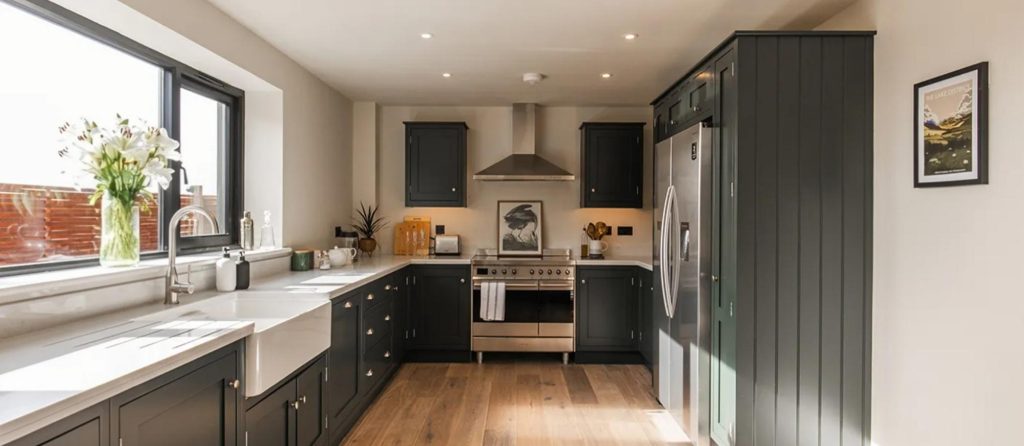
Inside the house
Most of the work is indoors: a single room being freshened up, a whole house after a move, or a staircase and landing that have not been touched since the place was built. What follows is what comes up most often rather than a limit — if the job is not on the list, ask anyway.
Walls & ceilings
- Emulsion, two coats as standard
- Filling, sanding and caulking beforehand
- Cracked or blown plaster made good
- Stain blocking on water marks and nicotine
- Feature walls and colour matching
Woodwork
- Skirting, architrave and window boards
- Doors and frames, brushed or sprayed
- Staircases, spindles and handrails
- Knotting, priming and undercoat
- Satinwood, eggshell or gloss
Wallpaper
- Hanging, including patterned and lining
- Stripping old paper and sizing walls
- Single feature walls
- Made good where paper has pulled the plaster
Outside the house
Exterior work is weather work. Matt books it for the dry months and keeps an eye on the forecast rather than starting a coat that will not cure.
- Masonry paint on render and pebbledash
- Fascias, soffits, bargeboards and guttering
- Windows, sills and front doors
- Garden walls, fences, sheds and summerhouses
- Washing down, scraping back and priming first
How it goes
How a room gets done
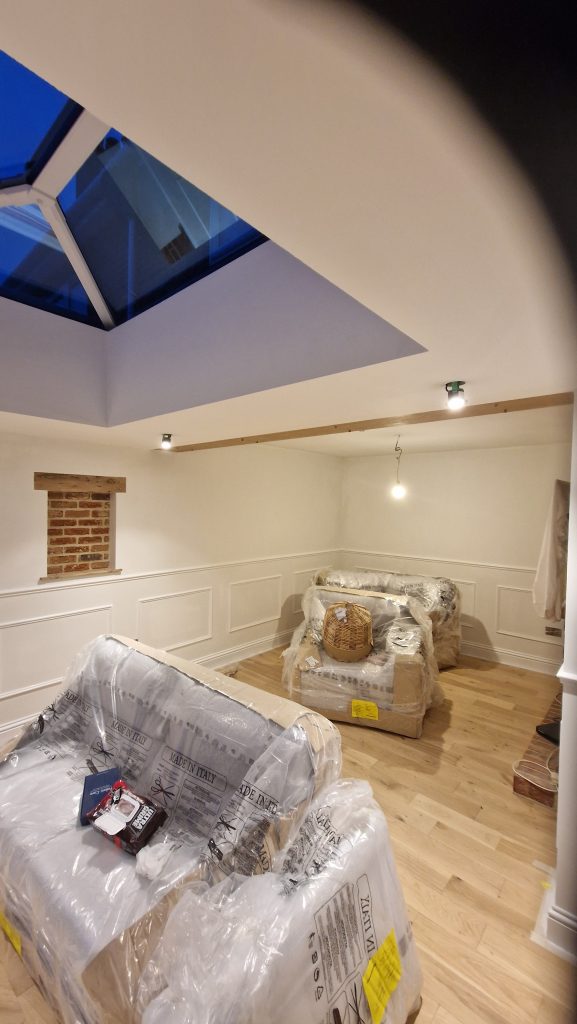
Furniture goes into the middle of the room or out of it, and whatever stays is covered. Floors get proper dust sheets rather than plastic, which slides underfoot. Socket faces, switch plates and door furniture come off instead of being cut around. None of that shows in a photograph afterwards, and all of it shows in the finish.
Then the slow part. Cracks are raked out and filled, nail holes stopped, flaking paint scraped back and the whole lot sanded flat. The gap where the skirting meets the wall is caulked so the line comes out sharp. Bare plaster gets a mist coat first, because emulsion straight onto new plaster lifts off with the roller a year later.
Painting runs from the top down: ceiling first, then walls, then woodwork last, so nothing already finished gets caught. Two coats of emulsion as standard, and more when a strong colour is going over a pale one or the other way round. Woodwork is knotted, primed and undercoated before the top coat goes near it.
At the end the sockets go back on, the furniture goes back where it started and the dust sheets leave with Matt. There is a walk round before he goes, which is the moment to point at anything that is not right — far easier to put a brush to it then than a fortnight afterwards.
Where Matt works
Painting and decorating in Norwich and the villages round it
Most people ringing round want somebody near enough to come back if anything wants attention. Matt works out of Lenwade, which puts Norwich, Taverham, Drayton, Costessey, Reepham, Dereham and most of mid Norfolk inside a short drive, and close enough that a room can be looked at properly before it is priced.
What it costs
Priced per job, not per hour
Every quote is written after looking at the actual room, because a wall that needs two coats and a wall that needs stripping, filling and three are not the same job. You get one price for the whole thing, and it does not move unless you change what you have asked for.
Paint can be supplied by Matt at trade prices or bought by you — whichever you prefer. If you already have a colour in mind, bring the code and it will be matched.
The quote sets out what is included — how many coats, which surfaces, whether the woodwork is brushed or sprayed — so there is nothing left to argue about at the end of it.